
The Wok Guide: Why Japanese Iron Woks Cook Differently
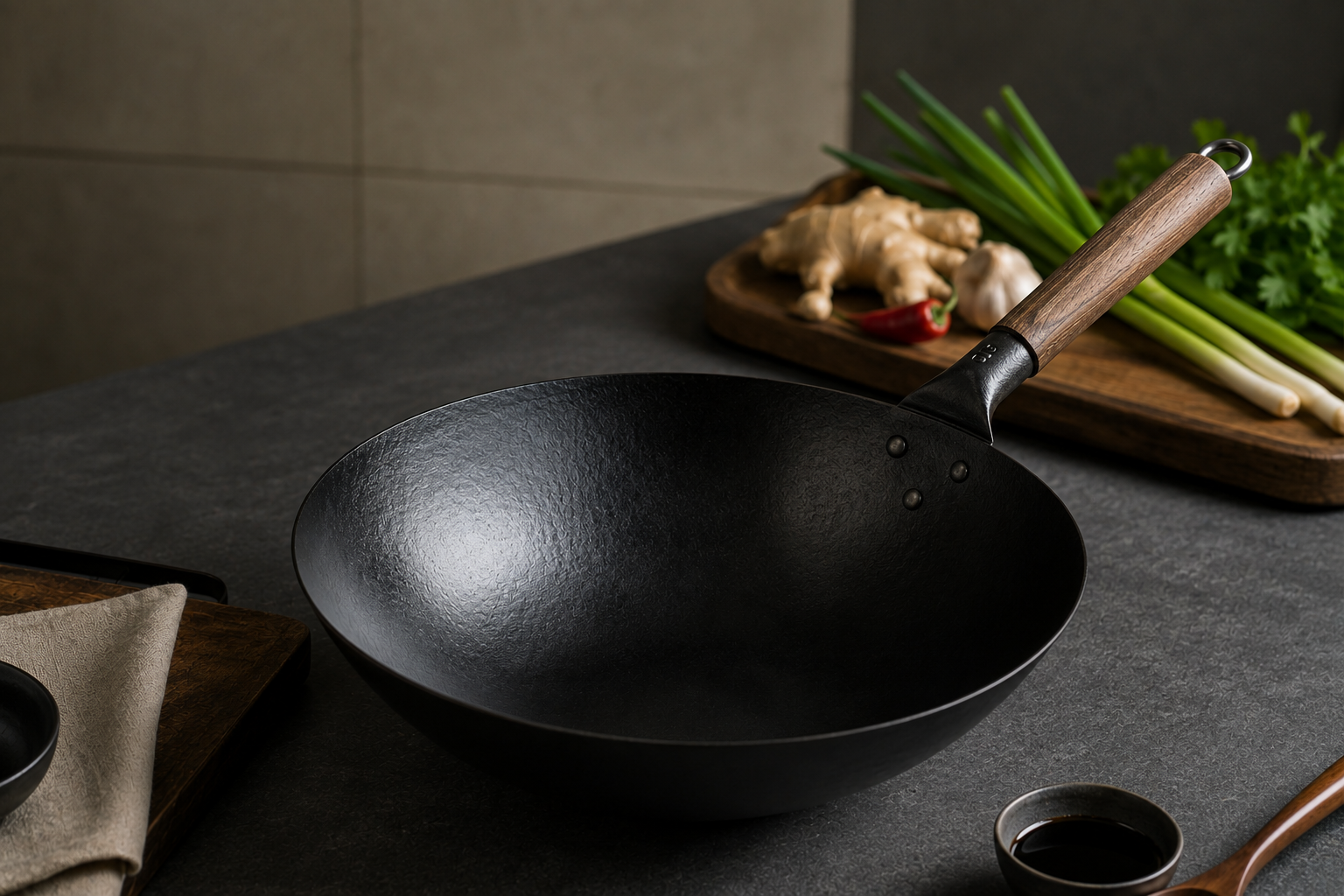
Same shape, very different result. Here's what makes a Japanese iron wok perform the way it does — and why it matters for how your food turns out.
A wok is a wok — until you cook with a Japanese iron one. The shape is familiar. The handle works the same way. But something about the result is different: the heat is more immediate, the surface more responsive, the food more distinctly itself. It's the kind of difference that's hard to explain until you've experienced it, and hard to go back from once you have.
The reason comes down to where these woks are made, how they're built, and what the material actually does under heat. Here's the full picture.
Where Japanese iron woks come from: Tsubame Sanjo
Most of Japan's finest iron cookware — woks, pans, and everything between — comes from a single region: Tsubame Sanjo, a small cluster of cities in Niigata Prefecture on Japan's northwest coast. The region has over 400 years of metalworking expertise, producing knives, cutlery, and cookware that are considered among the world's best.
This isn't manufacturing heritage in the abstract sense. Manufacturers in Tsubame Sanjo combine traditional metalworking principles with cutting-edge technology — processes originally developed for the automotive industry now applied to cookware. The precision that goes into a wok from this region is measurably different from what's possible in a standard pressing facility.
Tsubame Sanjo doesn't just make cookware. It makes cookware the way a watchmaker makes a watch — with a precision that shows up in how the finished product performs.
Pearl Life's iron woks are crafted in Tsubame Sanjo, using the time-tested techniques of metalworking craftsmen with over 70 years of manufacturing experience in the region. That provenance is part of what makes the product what it is.
What iron actually does under heat
Iron is not the most glamorous material in a modern kitchen, but it has physical properties that no coated pan can replicate:
Extreme heat tolerance
Iron handles temperatures that would destroy a coated pan — the kind of high heat needed for real stir-fry, proper searing, and the smoky depth that professional cooks call wok hei (鑊氣, literally "breath of the wok"). Unlike non-stick coatings that break down at high heat, iron surfaces actually improve with the intense temperatures needed for proper wok hei.
Even heat distribution with smart construction
Japanese iron woks are constructed with a thick bottom and thinner sides — creating uniform heat conduction while keeping the pan light enough for everyday use. The thick base retains heat through the thermal shock of adding cold ingredients. The thinner sides let heat climb quickly during tossing.
A surface that gets better with use
Every time you cook in an iron wok, polymerized oil bonds to the surface and builds up a natural seasoning layer. With each use, the wok develops a unique character and depth of flavor — gradually becoming more non-stick and easier to use over time. A wok that's been used for five years cooks better than a new one.
No coating to fail
Teflon fails between 250–300°C — exactly the temperature range you need for stir-fry. Ceramic coatings chip. Iron has neither problem. It's the same material from surface to core, and there's nothing to wear through or flake off into your food.
The hammered finish: function, not decoration
Many Japanese iron woks — including those from Pearl Life — feature a hand-hammered surface pattern called tsuchime (槌目). It looks beautiful, but it was designed for performance.
Food contacts the entire surface evenly. Prone to sticking during rapid cooking. Good for slower techniques.
Hammering creates textured dimples that help with food manipulation, and results in a lighter, stronger pan than pressed alternatives. Sauces pool in the dimples; food lifts off the peaks. Better tossing, better release.
The hand-hammered finish strengthens the wok, making it resistant to warping under the kind of high heat that regular woks can lose their shape to over time.
Japanese iron vs. Chinese carbon steel vs. non-stick
Convenient for beginners. But high heat causes coating breakdown and toxic fume release, and the maximum temperature is capped — which is exactly the temperature needed for stir-fry. Degrades with each use.
The professional standard in Chinese restaurant kitchens. Extremely responsive to heat. Requires careful seasoning maintenance and rusts quickly if not stored properly.
Combines the high-heat performance of carbon steel with greater rust resistance (especially when nitrided) and a construction precision that mass-produced alternatives can't match. Gets better with use rather than degrading. Made-in-Japan quality and the long tradition of craftsmanship give confidence that the cookware is durable and safe.
A note on nitriding
Pearl Life's Nitrocraft woks go one step further. Nitriding creates rust resistance and durability, while an embossed finish minimizes food from sticking and burning. The process treats the iron surface at a molecular level — no coating is applied; the iron itself is changed. This means the rust resistance is structural, not cosmetic, and won't wear off with use.
For everyday cooks, this translates to one practical thing: you don't need to be as careful about drying the wok immediately after washing. It's more forgiving — while still performing at full iron temperatures.
A Japanese iron wok isn't a niche tool for specialty cooking. It's a general-purpose pan that happens to perform better under the conditions most home cooks actually use — high heat, quick timing, food that should have some char and smoke to it. The Tsubame Sanjo provenance isn't marketing; it's the reason the construction is precise enough to make that performance consistent.
Cook with one for a month, and it becomes difficult to go back to anything else.
Explore Pearl Life's iron wok collection — made in Tsubame Sanjo, nitrided for rust resistance, built to last.
Shop Iron Woks →