
Japan's Healthiest Cooking Trend Is Ridiculously Simple — and It Takes 15 Minutes
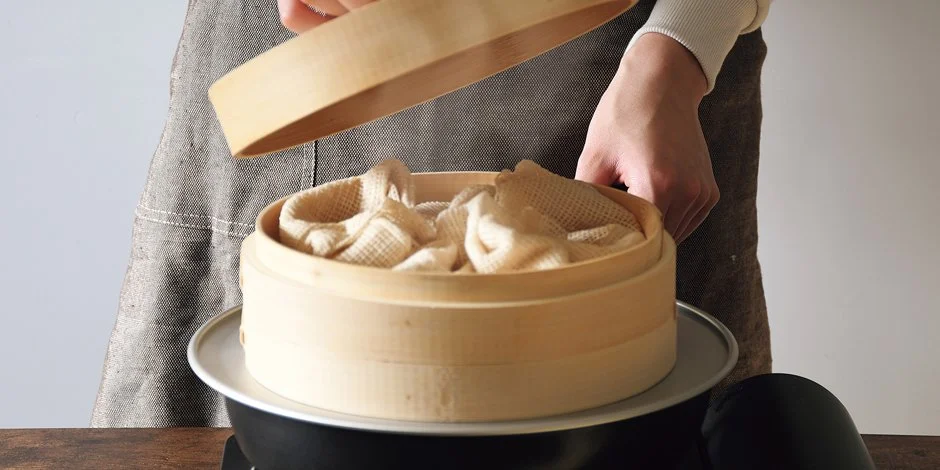
Steaming is having a moment in Japan. No oil, no mess, and dinner is ready in a quarter hour. Here's what the trend is about, and how to try it at home.
There's a reason Japan consistently ranks among the world's healthiest countries — and it has a lot to do with how food is cooked, not just what's eaten. One technique in particular is seeing a surge of renewed interest right now: steam cooking, or mushi ryori (蒸し料理).
The concept is simple: place food over simmering water, cover it, and let heat do the work. No oil. No complicated preparation. No watching over a hot pan. In about 15 minutes, vegetables are tender and bright, fish is perfectly flaky, and chicken stays moist in a way that's genuinely hard to achieve any other way.
In Japan right now, steam cooking is being rediscovered as the easiest way to eat well — no oil required, dinner in 15 minutes.
Why steaming is having a moment in Japan
Japan's relationship with health-conscious cooking has always been strong, but rising health consciousness has fueled demand for cookware that supports healthier cooking methods — including steamers and tools that allow low-fat cooking in everyday home kitchens. Steam cooking fits that demand almost perfectly.
At the same time, Japan's food culture is shifting toward combining global influences with health-conscious choices, and consumers are no longer satisfied with health benefits alone — there's a growing expectation that food should also be enjoyable and satisfying. Steaming delivers on both: it's genuinely good for you, and it produces food that tastes clean, full-flavored, and fresh.
The other driver is pure practicality. With rising inflation and changing lifestyles in Japan, hot pot and nabe-style cooking have surged in popularity as an affordable, nutritionally balanced option for home cooking. Steam cooking fits neatly into the same mindset — minimal ingredients, minimal fuss, maximum nutrition from whatever you have on hand.
What makes steaming so effective
Boiling leaches water-soluble vitamins (like vitamin C and B vitamins) into the cooking water and drains them away. Steam keeps them inside the food, where they belong.
Unlike sautéing, stir-frying, or roasting, steaming requires no added fat. The food cooks entirely in its own moisture and the surrounding steam.
Most vegetables take 8–12 minutes. Fish fillets, 10–15 minutes. Chicken thighs, around 15 minutes. It's genuinely one of the fastest cooking methods for whole ingredients.
No oil splatter, no scorched pan, no residue to scrub. Rinse the steamer basket and you're done. It's the kind of cleanup that doesn't feel like cleanup.
The Japanese way to steam: musu nabe
While Western cooks tend to steam with a bamboo basket or a metal steamer insert, Japan has its own take on the format: the musu nabe (蒸し鍋) — literally a "steaming pot." It's a ceramic or stainless pot with a fitted lid that traps steam efficiently, designed to go straight from stovetop to table as a serving vessel.
The version Pearl Life makes — the poron (ポーロン) style steaming pot — is a traditional Spanish-influenced ceramic design that has been widely adopted in Japanese home cooking. The clay body absorbs and radiates gentle, even heat that produces incredibly consistent results. Set it over a low flame, add a little water, arrange your ingredients on the rack inside, and cover it. That's the entire method.
How it works in practice
Add a little water to the base
Just enough to create steam — not so much that it touches the food. About a centimeter of water is usually right.
Place the rack and arrange your ingredients
Vegetables, fish, chicken, tofu, dumplings — almost anything works. Denser items go toward the outside; delicate things in the center. A piece of kombu or ginger in the water adds subtle flavor to the steam itself.
Cover and steam on medium-low heat
The lid is what makes everything work. Keep the heat moderate — aggressive boiling doesn't speed things up and can make food rubbery. A gentle, steady stream of steam is the goal.
Check for doneness and serve
The pot goes directly to the table — no plating required. In Japan, this style of communal steaming at the table is a big part of the appeal. Serve with ponzu, sesame sauce, or a simple miso dip.
What to steam
Almost anything responds well to steaming, but some ingredients are particularly good:
cauliflower
kabocha
white fish
(with ginger)
edamame
shumai
the cob
(shiitake, king)
(chawanmushi)
One thing to watch: aromatics and acidic ingredients — citrus, tomatoes, wine — can strip the surface of certain cookware if left in contact for extended periods. Place those directly on food rather than in the water, and you'll be fine.
The Pearl Life steaming pot
Available in five sizes (15cm to 27cm), the Pearl Life poron steaming pot is designed to go from stovetop to table. The ceramic body retains gentle, even heat for consistent results. Paired with a stainless steel rack, it handles vegetables, fish, chicken, tofu, and dumplings with equal ease. Sizes available: 15 / 18 / 21 / 24 / 27cm.
There's something satisfying about a cooking method this old that still works this well. Steam has been used in Japanese kitchens for centuries — for rice, for dumplings, for delicate egg custards — because it produces results that are genuinely hard to match any other way. The fact that it's also the fastest, lowest-effort, least-mess option makes it almost too good to be true.
If you've been looking for a way to eat better during the week without adding complexity to your routine, this is a good place to start.
Explore the Pearl Life Musu Nabe steaming pot — five sizes, stovetop to table.
Shop Pearl Life Cookware →